
Moscow Directory Runs by Year
The main Moscow city directory shelf is at the University of Idaho Special Collections Reading Room. Its directory holdings list calls the collection substantial but incomplete. The listed Moscow telephone-book runs begin in 1920, continue through several grouped spans, and reach the mid-1980s or later. Separate Moscow/Pullman business volumes reach 2000–01. These are dated snapshots, not a continuous resident roll. Researchers should confirm the exact title and volume before a visit because slash dates on the holdings page do not prove that every annual issue survives.
| Collection | Years | Where Held | Access |
|---|---|---|---|
| Moscow telephone directories | 1920–21; 1922–27/28; 1930–70; 1972–84/85– | UI Special Collections | Reading Room; incomplete subscriber runs |
| Moscow/Pullman business directories | 1957–2000/01, selected years | UI Special Collections | Reading Room; verify each volume |
| Idaho and regional business directories | 1866–1930/31, selected editions | UI Special Collections | Reading Room and catalog |
| Ott telephone-directory image | 1910 | UI Digital Collections | Free online image and metadata |
| Moscow newspapers | 1889–current, with gaps | UI, State Historical Society, LCHS | Microfilm, reading room, request |
The apparent 1929 gap and other breaks require care. A missing name may reflect a missing book, no telephone service, a rural route, initials, or a married-name change. Search two nearby editions. Regional business directories add early firms and professional names, but they do not substitute for a household directory. Moscow city directories become much stronger when the year and source type are written down with every result.
Moscow Directories at UI
The University of Idaho is both a custodian and a major source of Moscow names. Special Collections holds telephone books, regional directories, university catalogs, commencement programs, the Gem of the Mountains yearbooks, newspapers, maps, and local genealogy works. Reading-room access is the key fallback when a volume is not digitized. Ask staff for the call number, exact year, and any restrictions before traveling, and ask whether adjacent editions can be pulled at the same time.
The genealogical resources list also points to Latah vital-record extracts, cemetery records, Catholic records, oral histories, and university material. A former student may appear in a yearbook or catalog even when no telephone subscription exists. That campus trail is particularly important in Moscow, where university records form a parallel directory of people.
View the UI Moscow directory holdings before a visit.
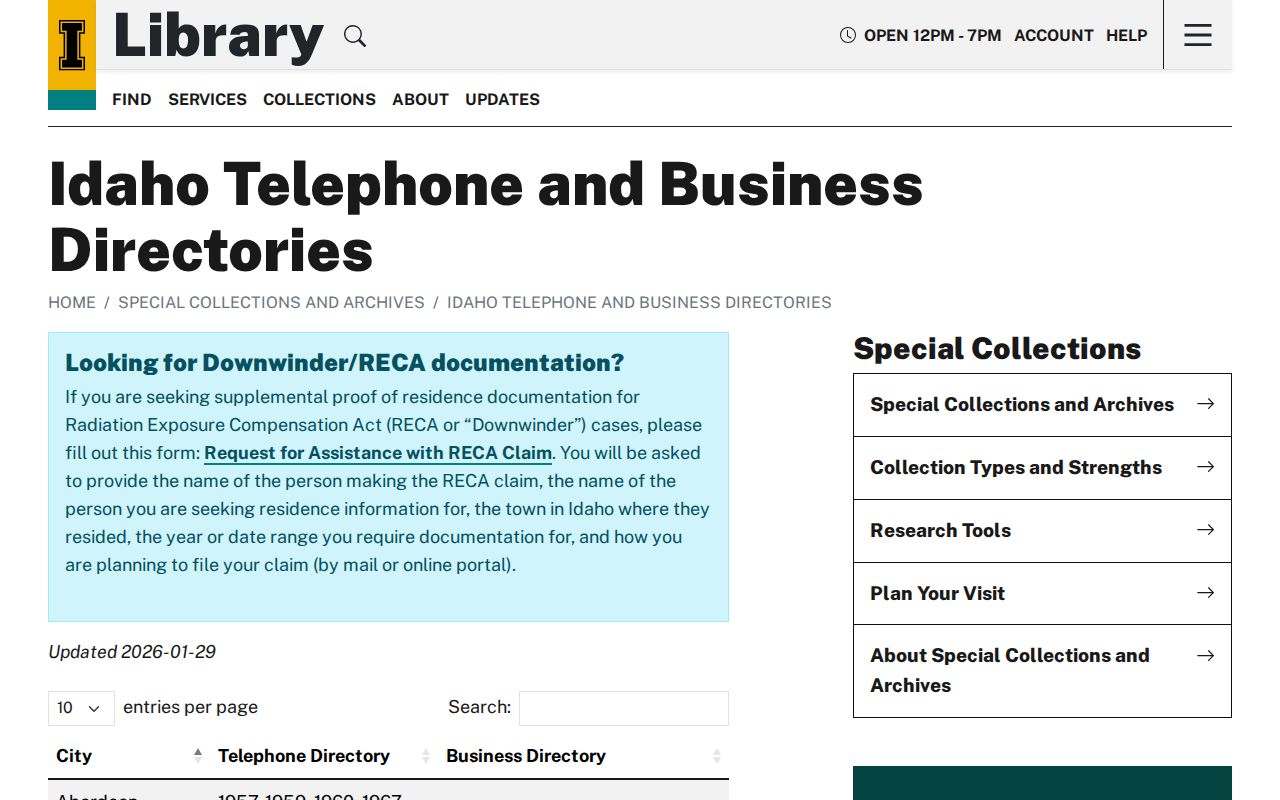
The captured holdings page shows why the title and run must be checked rather than treated as a complete annual shelf.
Moscow Telephone Book Limits
A telephone book and a city directory are not the same source. The UI directory reference guide explains that telephone companies list subscribers, while directory publishers often canvass homes and firms. Telephone books usually lack a reverse section. City volumes are more likely to include a street or telephone-order index.
| Source | Best use | Main limit |
|---|---|---|
| Telephone book | Subscriber name and telephone lead | Not every occupant had service |
| City directory | Name, address, household and reverse lookup | Coverage and fields vary by edition |
| Business directory | Firm, proprietor, trade and address | Not a household roll |
This distinction prevents a common mistake: absence from a Moscow telephone book does not show that a person was absent from the city. It only shows that the searched name was not found in that edition as searched.
Moscow's 1910 Directory Image
The earliest directly located digital Moscow directory item is a 1910 photograph from the Clifford M. Ott Collection. Its metadata identifies “Telephone directory, Moscow and Rural Telephone Company [03],” but supplies no full OCR transcript. Searchers must inspect the page image and preserve the printed spelling, punctuation, and abbreviations instead of silently expanding them.
Open the 1910 Moscow telephone-directory item alongside the volume details.
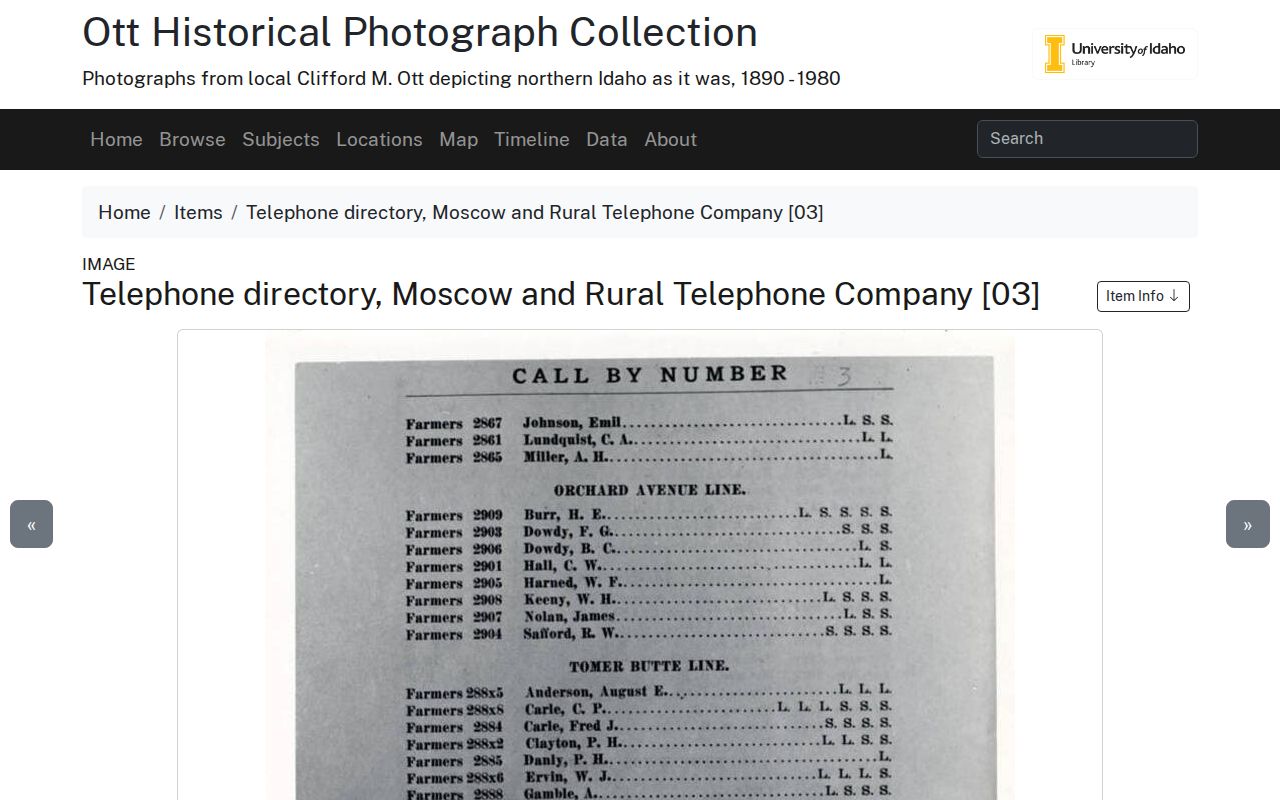
The image is a dated subscriber source, not proof of a complete Moscow household. It is most useful when paired with a map, newspaper, census, or deed.
Read Moscow Directory Entries
Copy an entry exactly before interpreting it. Depending on the title and year, a Moscow city directory entry may show a surname, initials, spouse or widow notation, occupation, firm, street address, apartment, telephone number, and an owner or householder mark. Page, volume, and year belong in the citation. Photograph the abbreviation key too, since the same letter can mean different things in different editions.
| Name | Surname, given name or initials; spouse may appear |
|---|---|
| Work line | Occupation, profession, business, or firm when printed |
| Address | Street number, street, and room or apartment when printed |
| Telephone | Subscriber number; its presence does not prove ownership |
| Marks | Owner, renter, householder, widow, or cross-reference if the key defines it |
- Criss-cross directory
- A reverse section arranged by street address or telephone number rather than surname.
- Householder index
- A list focused on the person identified as the head or listed resident of a household.
- Abbreviation key
- The edition's own legend for short forms, symbols, occupations, and status marks.
A 1943 Moscow Address Lead
A concrete example shows the value and the limit of a citation. Latah Legacy volume 41 cites a November 1943 Moscow telephone-directory entry for Dr. Earl V. Adams at 324 N Main Street. The article supplies the name, profession, date, and situs address, and connects that Moscow entry to a wider regional history. It does not reproduce the full original page.
Therefore the telephone number, page number, and exact typography still need verification in the 1943 volume. This is good directory practice: use a secondary citation as a lead, then request or inspect the source page. Pair the address with a deed, newspaper issue, census, probate file, or map only after each source has been checked on its own terms.
Moscow Newspapers Fill Directory Gaps
Newspapers can explain what happened between editions. The UI microfilm list includes the Moscow Mirror, Daily Star-Mirror, Daily Idahonian, Idahonian, and Moscow-Pullman Daily News, with gaps and overlapping runs. Search the exact newspaper title and issue date. Obituaries, marriage notices, business ads, court notices, and social columns can distinguish a move, death, or changed name.
Yearbooks and commencement programs fill a different gap. They can identify a student, faculty member, club, portrait, or graduation year without claiming that the person held a Moscow household address. For places, the UI Sanborn collection and historic city photographs add building and street context, but neither proves ownership.
Moscow Research Beyond the Shelf
The Latah County Historical Society research library holds family, business, club, newspaper, photo, oral-history, map, probate, cemetery, and vital-event transcription material. The society expressly helps people determine who once lived in a home. Most resources are not online. Research appointments at the Centennial Annex, 327 E 2nd Street, should be made at least 48 hours ahead; the listed schedule is Tuesday through Friday, 9:00 a.m. to 4:00 p.m.
See the society's research access and collection outline before requesting help.
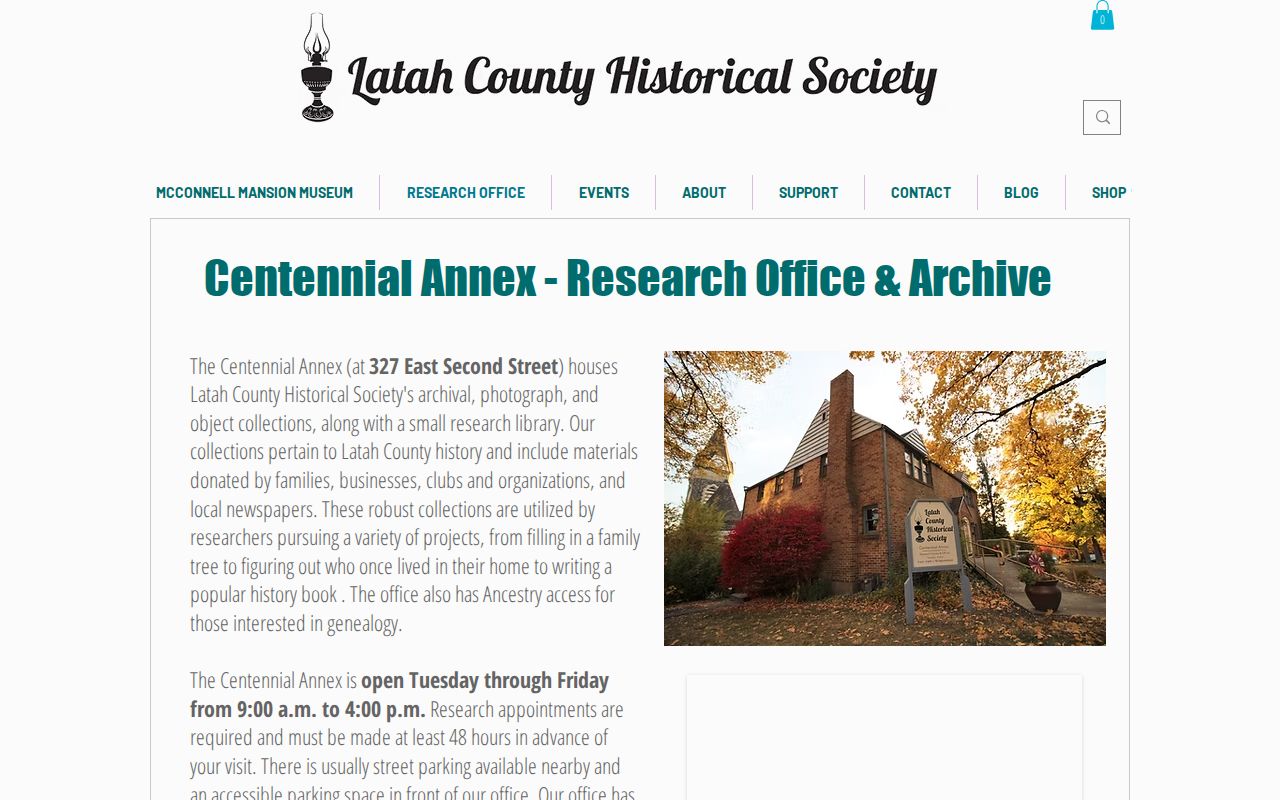
The capture reinforces the fallback route: use an appointment or a remote mail, phone, or email request when the needed Moscow material is not digitized.
Trace Families in Moscow Directories
Family research works best as a dated chain. Begin with a confirmed person, address, school year, or business, then move through nearby editions. A city directory supplies the short interval between federal census years. Census schedules can add household relationships, ages, birthplaces, and migration clues, while a newspaper or cemetery record can close a trail after a name vanishes.
- Find the first likely listing and copy its full citation.
- Check the prior and next available editions for name and address changes.
- Use a reverse section only when that title actually has one.
- Pair the directory year with the closest public census and a dated newspaper.
- Test the final appearance against an obituary, cemetery, court, or deed lead.
Do not force a conclusion from silence. A missing Moscow listing can mean no phone service, a rural route, a child omitted from the listed name, a spouse-only entry, a spelling error, or a missing volume. Historical street names and city boundaries also differ from modern ZIP geography. The Latah court microfilm catalog, State Archives indexes, and FamilySearch collections provide additional online or center-based routes; restricted images may require an account, affiliate center, courthouse visit, or original-record request.
Note: A finding aid proves that a collection exists, not that a named person appears in it.